Find, Organize,
Trade, Kollec
The all-in-one platform for Pokémon card collectors. Scan cards with your camera, find them by description, and discover nearby traders automatically. Manage your collection by set or by pokemon, with advanced filters and per-card details.
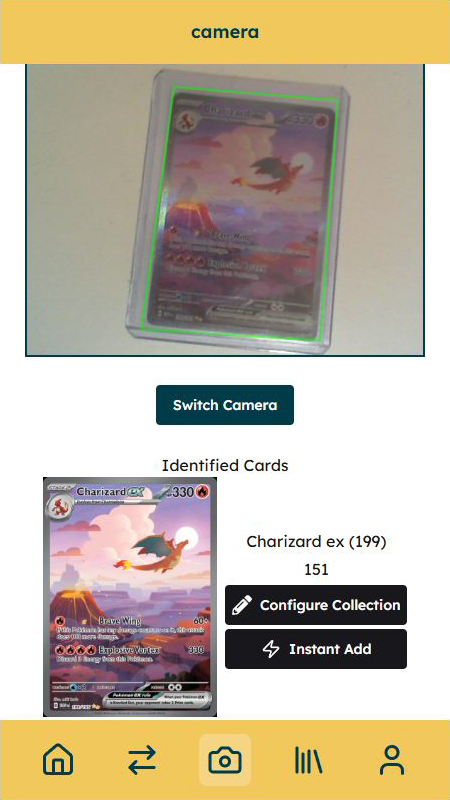
Instant Card Recognition
Hold your camera up to any Pokémon card and Kollec identifies it instantly. No typing, no scrolling through endless lists — just point and collect.
On-device AI runs the entire recognition pipeline on your phone. No internet required, results in under a second.
Search by Description
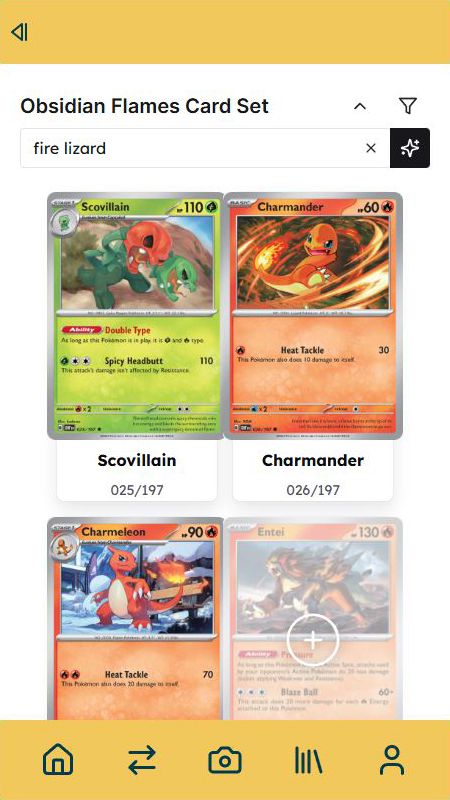
Remember a card but not its name? Just type "blue dragon" or "fire fox with lightning" and Kollec understands what you mean and finds the right card.
A language-understanding model runs locally on your device and searches your entire collection in under 100ms.
Automatic Trade Recommendations
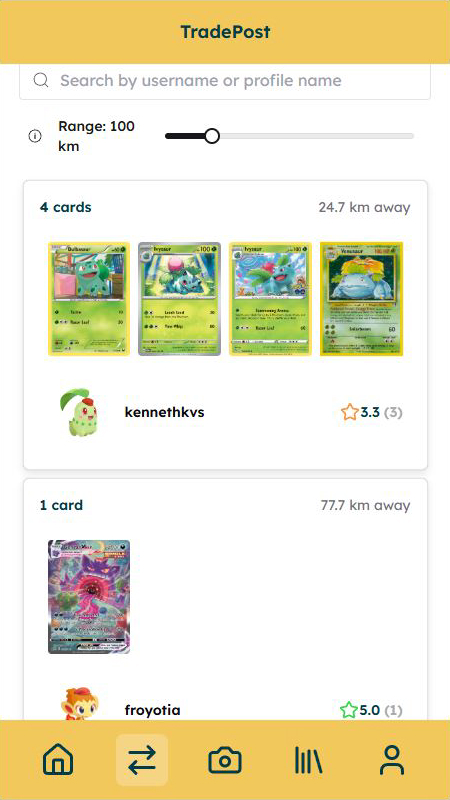
Kollec finds nearby collectors who have what you want — and want what you have. No posting, no scrolling. Just real trades with real people near you.
Location-aware matching with a configurable distance filter. Every suggestion is a mutual match worth making.
© 2026 Kollec
GitHub